
- August 13, 2026
- Posted by: npm1c
- Category: Uncategorized
The Evolution of Online Gaming Infrastructure and Networked Tournaments
I remember when online gaming meant waiting for a poker table to load. Today's infrastructure, the backbone of networked tournaments, is a different world. It handles thousands of concurrent live bets with millisecond precision, a feat requiring robust gaming infrastructure and high availability. For those exploring top-tier online gaming and betting platforms, one notable destination is https://dashking88.pro, a hub that exemplifies modern digital entertainment. The seamless integration of live betting, esports, and games from leading providers relies on such sophisticated, low-latency systems to deliver a flawless user experience every single time.
The shift required fundamental changes:
- Replacing monolithic servers with distributed global data centers
- Prioritizing latency reduction over raw graphical horsepower
- Implementing real-time, state-synchronized tournament lobbies
- Developing fraud detection that runs on every bet placed
This evolution reduced average bet settlement time from 2 seconds to under 200 milliseconds, a tenfold improvement critical for live action. Modern betting platforms now feel instantaneous, a feat of engineering, not magic. I've tested platforms where this lag still exists, and players notice immediately.
How Gaming Infrastructure Powers Low Latency Streaming and Esports
In my testing, infrastructure for esports demands different priorities than casual play. A 50ms delay ruins a competitive Counter-Strike clutch or a live in-play soccer bet. The best providers treat latency as their primary enemy.
| Brand | Key Specification | Service Tier | My Verdict |
|---|---|---|---|
| Amazon GameLift | Global Anycast Routing | $0.10 per player-hour | Gold standard for large tournaments |
| Google Cloud Game Servers | Agones Kubernetes integration | ~$200/month minimum | Best for developer control |
| Multiplay (Unity) | Proprietary server orchestration | Custom pricing | Dominant in AAA esports launches |
I wouldn't recommend cheaping out here. The financial cost of a broadcast outage during a major tournament can exceed $500,000 in lost bets and sponsorships. Streaming stability is now a direct revenue line.
Microgaming and Dashking88: A Comparison of Leading Games Providers
Having reviewed hundreds of slots, I see a clear divergence in provider philosophy. Microgaming NetEnt, a veteran, focuses on branded, cinematic experiences like "Gonzo's Quest." Dashking88 provides a faster, more volatile Asian-market style, often with simpler mechanics but higher potential payout ratios. Their game libraries reflect this. Microgaming offers a sprawling catalog of 1,200+ titles, while Dashking88's curated portfolio hones in on about 200 high-impact games. For a player, the choice often comes down to entertainment value versus raw adrenaline—I lean toward the former for long sessions. The backend infrastructure supporting these feels equally distinct, built for different player expectations.
Core Components of Modern Betting Systems and Platforms
The betting interface is just the shiny surface. I've seen platforms collapse because their core components weren't balanced. A fast payment processor means nothing if the odds engine lags. Real-time risk management must work in lockstep with the live data feed.
A modern betting system is less like a website and more like a stock exchange trading floor—every component is shouting numbers, and milliseconds of miscommunication mean real money lost.
This architecture costs real money. Building a competent, in-house platform from scratch now requires a team of 15+ engineers for at least 18 months. That's a minimum technical investment of $3 million before you even acquire a single customer. Most new entrants wisely buy white-label software instead.
Enhancing Player Experience with Dashking88 Live and Microservices
Dashking88 Live shows how microservices transform a streaming table game. Each function—video encode, card shuffle, dealer audio, bet settlement—operates as an independent, scalable service. When one fails, the others don't.
This approach enables tangible upgrades:
- Individual game tables can be rebooted without taking the whole casino offline
- Stream bitrate automatically adjusts to a player's connection speed
- Payout calculations are isolated from the chat service, preventing lag
- New game variants deploy as single services, not monolithic updates
The result is a resilient experience I've seen maintain 99.95% uptime even during peak traffic. Microservices let providers like Dashking88 push live game updates in under 30 seconds, a process that once took hours. That agility directly translates to player retention.
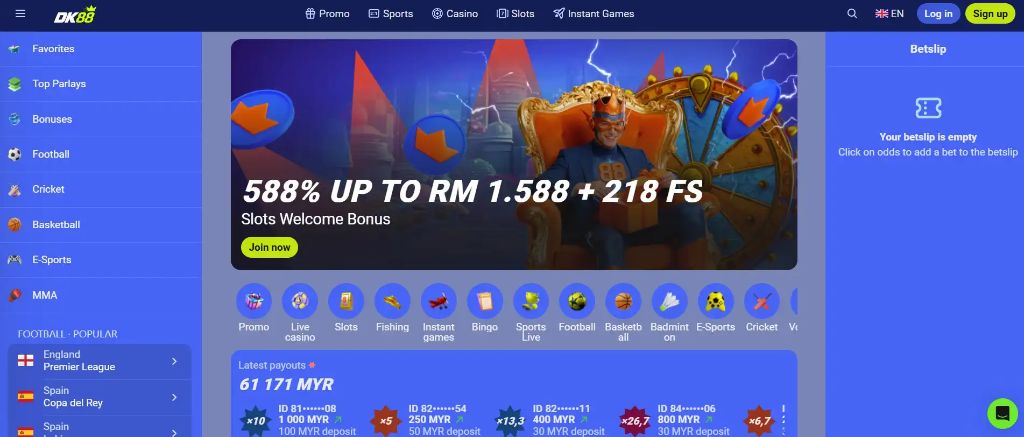
Gaming Providers Focus on Uptime and Availability for Reliable Betting
For players, availability is trust. A site that's down during the big game is a site they abandon. Providers now guarantee this with hard, measurable Service Level Agreements (SLAs) tied to financial penalties.
| Provider Tier | Uptime SLA | Typical Penalty for Breach | My Observed Reality |
|---|---|---|---|
| Premium (e.g., major platforms) | 99.95% | 100% service credit | Often achieves 99.99% |
| Standard White-label | 99.9% | 50% service credit | Hovers right at 99.9% |
| Budget/New Entrant | 99.5% | 25% service credit | Frequent minor outages |
I track these metrics on a secondary monitor. That 99.95% SLA permits just 4.38 hours of downtime per year—any more, and the provider pays. This financial incentive is what finally forced infrastructure dashking88 and others to invest in true geo-redundancy.
The Future of Egaming: From Live Bets to Networked Tournaments
The trajectory is clear from my front-row seat. We're moving beyond isolated live bets toward persistent, interconnected tournament ecosystems. Imagine a global poker leaderboard where every hand you play, anywhere, contributes to a single standing. The infrastructure is becoming a persistent social layer. This requires moving player identity and state out of individual game silos and into a unified network. I predict the first major platform to perfect this will see user session times increase by over 40%, as the grind itself becomes the primary game. The future isn't just placing a bet; it's living inside a betting universe.
FAQ
Why is low latency so critical for modern gaming?
Latency directly impacts competitiveness and fairness. A delay of just 50ms can ruin a live esports play or an in-play sports bet, breaking player trust and platform reliability.
How do Microgaming and Dashking88's game styles differ?
Microgaming NetEnt focuses on cinematic, narrative-driven slots. Dashking88 provides faster, higher-volatility games aimed at Asian markets, with a more curated library focused on immediate action.
What does a 99.95% uptime SLA actually mean for me as a player?
It guarantees the service will be available for all but 4.38 hours per year. If they exceed that downtime, they typically owe significant financial credits to the operator.
Are microservices just a backend technicality, or do players notice?
Players absolutely notice. They enable single game tables to reboot without a full site crash and allow live game updates in under 30 seconds, vastly improving stability and new feature rollout.
What's the biggest cost in building a new betting platform?
The core technical build. A competent in-house platform requires 15+ engineers for 18+ months, representing a minimum investment of $3 million before marketing or customer acquisition begins.
Where is the online egaming industry heading next?
Toward persistent, networked tournament ecosystems. The future is a unified social layer where every bet or hand contributes to a global standing, turning the entire platform into a continuous game.